2026 OPENAI
JALAPEÑO_
CUSTOM_INFERENCE_
CHIP_50%.
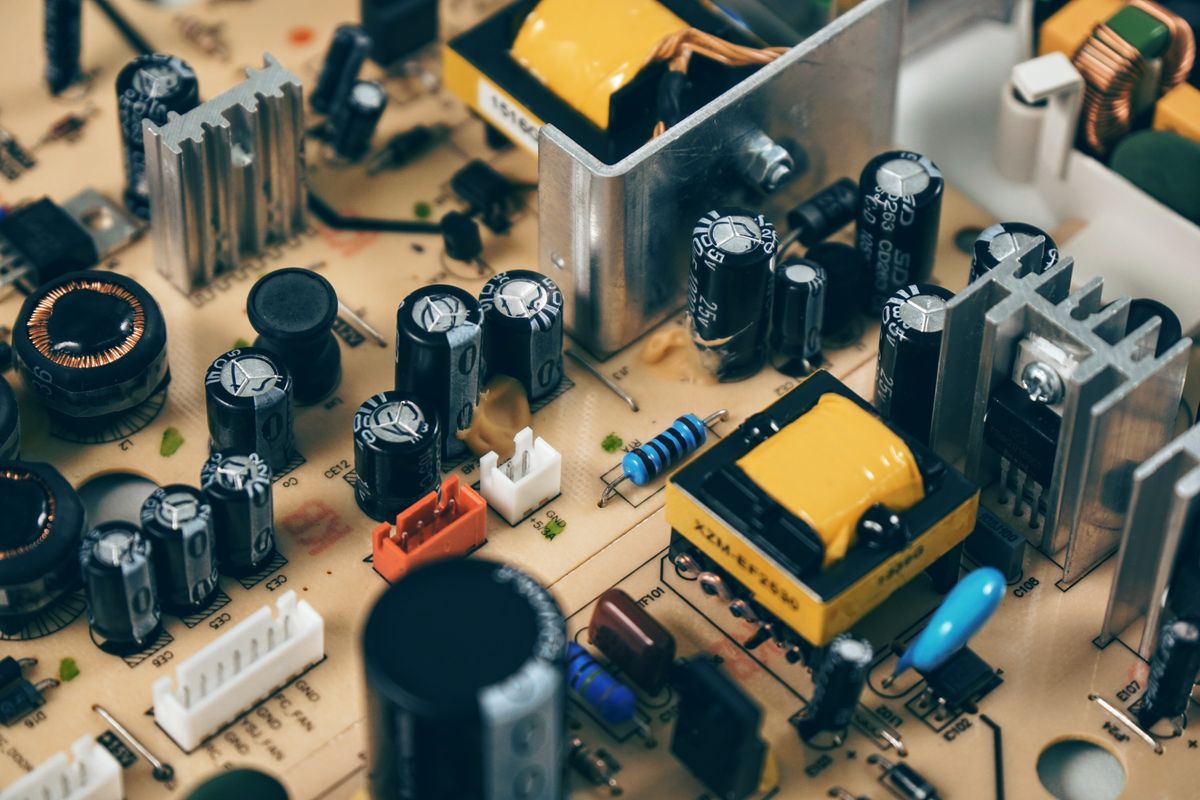
On June 24, 2026, OpenAI and Broadcom unveiled Jalapeño — OpenAI's first custom AI inference chip. This purpose-built ASIC for large language model (LLM) inference claims roughly 50% lower inference cost versus mainstream AI GPUs, with substantially better performance per watt, manufactured on TSMC's 3nm process, and slated for deployment at Microsoft and other data center partners by end of 2026. This article covers the backstory, ASIC architecture, performance data (with caveats), the 9-month tape-out sprint, supply chain roles, deployment roadmap, Nvidia competition, industry impact, FAQ, key people, and timeline — plus a five-step action list for Mac developers navigating the shifting economics of inference.
1. Pain Points: Why OpenAI Had to Build Its Own Chip
1) Inference bills are crushing margins: Every ChatGPT response burns GPU inference cycles; as GPT-4/5 capabilities scale, inference cost is the heaviest stone on the path to profitability. 2) General GPUs waste compute structurally: Nvidia H100/H200/Blackwell are Swiss Army knives — designed for training, gaming, simulation, and more; LLM inference is highly homogeneous, and much of that flexibility is wasted overhead. 3) Competitors got there first: Google TPU, Amazon Trainium/Inferentia, Microsoft Maia 100, and Meta MTIA are already deployed; OpenAI arrived late but moved fast with a 9-month tape-out. 4) Supply leverage: Even if Jalapeño handles only 20%–30% of inference load, that saves hundreds of millions and reduces dependence on a single vendor — the core strategy is diversification, not divorce from Nvidia.
2. What Is Jalapeño? Full Architecture Breakdown
2.1 ASIC, Not a GPU
An ASIC (Application-Specific Integrated Circuit) means this chip does one thing — LLM inference. No gaming, no training, no general compute. That single-minded focus drives extreme domain efficiency. OpenAI hardware lead Richard Ho put it this way: "Jalapeño was designed from the ground up for LLM inference using detailed insights from our close collaboration with OpenAI researchers. We optimized the architecture around the kernels, memory movement, networking, and serving patterns that matter most for frontier AI models."
2.2 Core Architecture Highlights
- Blank-slate Design: Rebuilt from scratch for modern LLM inference — every decision centers on Transformer compute patterns.
- Minimize Data Movement: Inference bottlenecks often sit in memory bandwidth; the architecture cuts wasteful shuffling between memory and compute units.
- Compute / Memory / Network Balance: Tuned specifically for LLM load profiles so real-world utilization approaches theoretical peaks.
- Broadcom Tomahawk Networking: High-performance inter-node communication for multi-card cluster inference on frontier-scale models.
- Celestica Board / Rack Integration: Handles chip-to-motherboard and rack integration for volume production.
2.3 Process Node and Models in Testing
Manufacturer: TSMC 3nm (same generation as Apple M4 and Nvidia Blackwell). Engineering samples are already running at target frequency and power in OpenAI's labs, including the flagship coding inference model GPT-5.3-Codex-Spark.
3. Performance and Cost: Key Data Comparison
Figures below come from Broadcom CEO Hock Tan and OpenAI official statements — all early test results. A full technical report arrives in the coming months; treat these as vendor-reported numbers until independently verified.
| Metric | Jalapeño (Early Tests) | Benchmark |
|---|---|---|
| Inference cost savings | ~50% | vs. current mainstream AI GPUs (Broadcom CEO, Bloomberg) |
| Performance per watt | Substantially better than current state-of-the-art | OpenAI official statement |
| Absolute performance | On par with Nvidia Blackwell and Google TPU | Broadcom CEO, Reuters interview |
| Thermal performance | Better than expected | OpenAI internal testing |
Greg Brockman noted that Jalapeño went from initial design to tape-out in just 9 months, with parts of the design and optimization process accelerated by OpenAI's own AI models. Production validation still depends on: ① OpenAI's full technical report; ② real-world deployment at Microsoft and partner data centers; ③ independent third-party benchmarks.
4. Big Tech Custom Chip Landscape
| Company | Custom Chip | Use Case |
|---|---|---|
| TPU | Training + Inference | |
| Amazon | Trainium / Inferentia | Training + Inference |
| Microsoft | Maia 100 | Inference |
| Meta | MTIA | Inference |
| OpenAI | Jalapeño (2026) | Inference |
5. Five-Step Action List: How Developers Should Respond
Step 1: Audit your current API cost structure — break down inference spend across ChatGPT, Codex, and self-hosted agents by token volume.
Step 2: Build a dual-stack fallback with cloud APIs plus local MLX/Ollama so you are not hostage to a single vendor's pricing.
Step 3: Track OpenAI's technical report and Microsoft Azure deployment progress; calibrate your 50% savings expectations against production data.
Step 4: Evaluate whether agent workflows over-rely on general-purpose GPU cloud instances; leave architectural room to migrate toward inference-optimized ASICs.
Step 5: Pre-run local quantized versions (Q4/Q8) of critical workloads on Mac to hedge against API price moves in either direction.
6. The 9-Month Tape-Out: Fastest ASIC Cycle Ever?
OpenAI and Broadcom claim this is the fastest ASIC development cycle ever in high-performance advanced semiconductors. Three accelerators drove the pace: ① Deep software-hardware co-development — model and chip teams worked in parallel, avoiding the guesswork that normally burns months in ASIC projects; ② AI-assisted chip design — OpenAI's own models sped up parts of the design process (VentureBeat cited sources saying prior-generation OpenAI models were used); ③ Broadcom's mature IP library — reusable networking and implementation IP compressed the path from logic design to physical tape-out.
7. Supply Chain and Partner Roles
| Role | Company | Responsibility |
|---|---|---|
| Chip architecture design | OpenAI | LLM inference optimization, full-stack architecture |
| Silicon implementation & networking | Broadcom | Chip fabrication, Tomahawk networking, volume support |
| Foundry | TSMC | 3nm process manufacturing |
| System integration | Celestica | Motherboards, racks, server integration, volume production |
| First deployment customer | Microsoft Azure | Data center deployment (starting end of 2026) |
8. Deployment Roadmap and Commercial Timeline
Near Term (End of 2026)
Engineering samples are running in OpenAI's labs; commercial deployment to Microsoft and other data center partners begins before year-end; priority workload is OpenAI's own inference stack (ChatGPT, Codex, API).
Mid Term (2027)
Volume production ramps; Broadcom's CEO predicts deployment will exceed the previously forecast 1.3 gigawatts (GW); the chip may open to external AI companies (official language: "built from the ground up for current and future LLMs across the industry").
Long Term (Through 2029)
OpenAI targets 10 gigawatts (10 GW) of compute powered by its own silicon — roughly the output of 10 nuclear power plants. A multi-generation roadmap is planned, with the next chip expected in 2028 and annual iterations thereafter; training chips may follow (currently inference-only).
9. Is Nvidia's Moat Still Intact?
Not a near-term replacement for Nvidia, for three reasons: ① Jalapeño does inference only, not training — frontier model training still runs heavily on Nvidia GPUs; in February 2026 Nvidia made a $30 billion direct investment in OpenAI, binding the two companies strategically. ② CUDA software ecosystem — a decade-plus of millions of developers and optimized libraries is the hardest moat to cross. ③ ASIC inflexibility — if LLM architecture shifts fundamentally, retooling a purpose-built chip is expensive and slow.
Jalapeño's real strategic value is "diversify supply, gain negotiating leverage." Quilter Cheviot global tech research head Ben Barringer: "Nobody wants to be beholden to Nvidia." Nvidia's counter-moves include the Vera Rubin platform, CUDA ecosystem depth, and that $30 billion OpenAI stake. Broadcom, meanwhile, is becoming the "TSMC of custom AI ASICs" — designing silicon for Google TPU, Meta MTIA, and now OpenAI Jalapeño; Broadcom stock is up ~18% YTD through the first five months of 2026, and nearly 7x since late 2022.
10. Industry Impact: What Changes for AI
Inference economics reshape business models: If the 50% cost savings hold in production, ChatGPT API pricing could drop further and the floor of the "AI price war" gets lower. Full-stack AI companies become the new standard — OpenAI's blog: "OpenAI is not only developing frontier models or building products on top of them; it is designing the infrastructure underneath them: chip architecture, kernels, memory systems, networking, scheduling, deployment systems, and product experience." Semiconductor landscape accelerates its split: winners include Broadcom, TSMC, SK Hynix/Samsung (HBM supply); pressure falls on Nvidia (inference share at risk) and AMD.
11. Deep Dive: How Lower Inference Costs Change Mac Developer Workflows
Take a 10-person team burning 500 million tokens per month on GPT-5 API — at current pricing, that's roughly $15,000/month. If Jalapeño delivers 50% inference savings that eventually flows through to API pricing, the same volume drops to $7,500 — but that requires a 12–18 month production validation cycle. The more realistic play is a three-tier split: high-frequency, low-latency tasks stay on the latest cloud models; batch jobs and code completion run locally on MLX 70B Q4 (M4 Max 128GB handles this); 24/7 agent workloads live on remote Mac nodes to avoid local thermal throttling. Jalapeño reinforces the long-term trend of falling compute costs, but Mac developers should not wait passively for price cuts — establish a measurable local inference baseline on unified-memory hardware or rented nodes, and treat the API as a premium channel, not the only option.
12. Key People
| Name | Title | Role in This Launch |
|---|---|---|
| Greg Brockman | OpenAI Co-founder & President | Public announcement; framed as "full-stack infrastructure strategy" |
| Richard Ho | OpenAI Hardware Program Lead | Technical architecture leader |
| Hock Tan | Broadcom CEO | Public claims of Blackwell-class performance and 50% cost savings |
| Sam Altman | OpenAI CEO | Overall strategic driver (has publicly stated desire for OpenAI to control its compute destiny) |
13. Timeline
14. FAQ: Your Questions Answered
Q1: Is Jalapeño a replacement for Nvidia GPUs?
A: Not now, and probably not for a while. It handles LLM inference only — not training. Nvidia's training dominance is safe in the near term; the relationship is complementary, not adversarial.
Q2: Is the 50% cost savings real?
A: It is early lab data from Broadcom's CEO in a Bloomberg interview, not yet independently verified. OpenAI's full technical report comes in the coming months — treat the headline number with appropriate skepticism.
Q3: What will regular users actually notice?
A: If savings hold in production, ChatGPT and API costs could drop further and response times may improve. Long term, AI services get cheaper and more accessible.
Q4: Why is it called "Jalapeño"?
A: No official explanation. OpenAI has a tradition of food-themed internal codenames; "jalapeño" likely signals spicy performance or a spicy market shake-up.
Q5: Will Jalapeño be available to other AI companies?
A: Official language says the chip is "built from the ground up for current and future LLMs across the industry," suggesting future external availability — but OpenAI's own infrastructure comes first.
Q6: When is the next-generation Jalapeño coming?
A: The next chip is expected in 2028, with annual iterations planned after that.
Q7: Does this move Nvidia's stock?
A: Nvidia's stock reaction was muted on announcement day. Markets see training dominance as safe short-term, but large customers building custom silicon is a structural long-term pressure.
15. Bottom Line: Local Mac Compute Is Still Your Best Hedge
Jalapeño marks the moment AI companies stop simply buying compute from the highest bidder — but purpose-built data center ASICs and everyday developers are still separated by months of deployment lag and slow API price transmission. Pure Windows/Linux cloud boxes can hit inference APIs, but they fall short on Cursor/Xcode toolchain parallelism, MLX local quantization, and launchd 24/7 agent hosting. If shifting inference economics have you rethinking your stack and you need predictable local or remote compute backup, consider MACGPU remote Mac nodes: unified memory for 70B quantized models, seamless integration with Cursor/LiteLLM on your machine — controllable compute is the best hedge until Jalapeño lands in production.